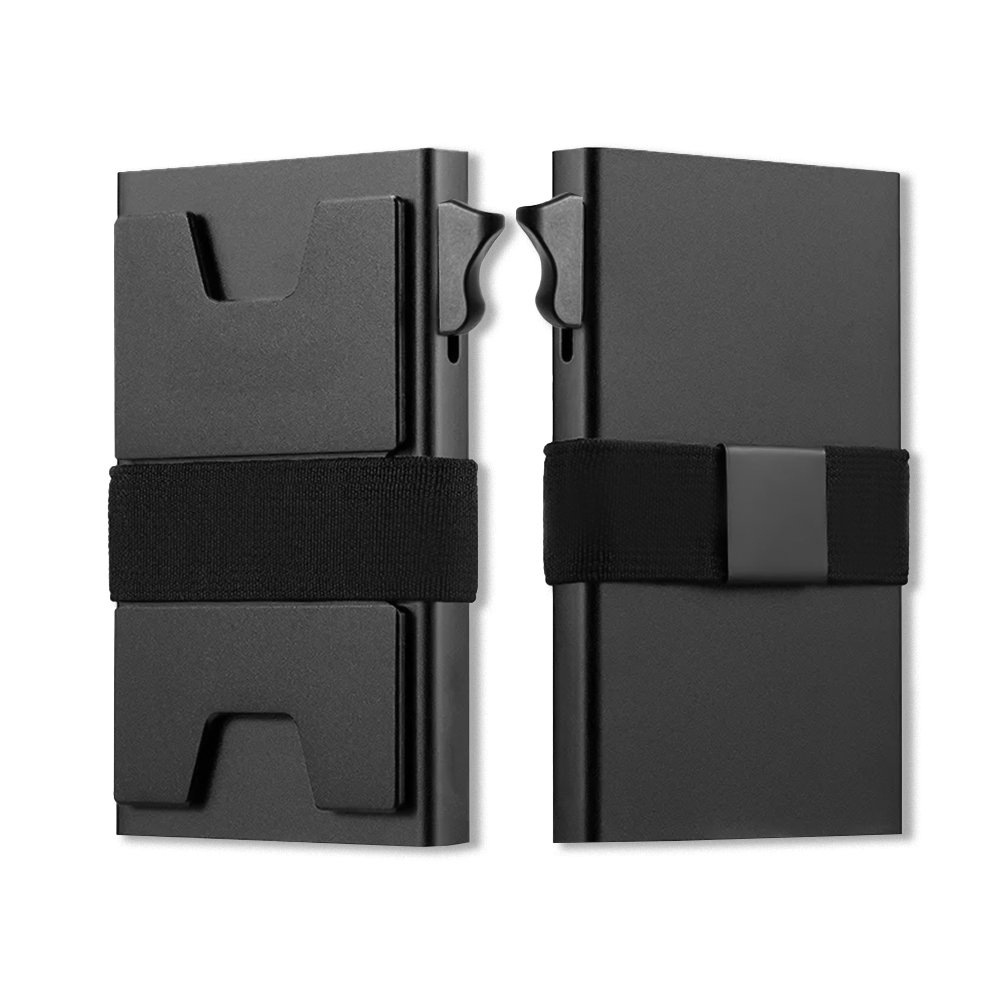
Analysis of 6020 Aluminum Alloy Properties and Its Application Advantages in Card Cases

I. Core Property Analysis of 6020 Aluminum Alloy

As a typical representative of 6xxx series Al-Mg-Si alloys, 6020 aluminum alloy contains 0.5%-0.9% silicon and 0.6%-1.0% magnesium as primary alloying elements. After solution annealing and aging treatment, it exhibits excellent mechanical properties: tensile strength reaching 260-320MPa, yield strength 220-280MPa, combining structural strength superior to 6061 alloy with good ductility of 8%-12%.

It demonstrates outstanding processability: low tool wear during cutting, strong welding adaptability (supporting TIG/MIG processes), and diversified surface finishes through anodic oxidation and electrophoretic coating. It shows significant corrosion resistance advantages in marine and industrial environments.

II. Adaptability to Diverse Forming Processes

Thanks to its excellent thermoplasticity and cold-working properties, 6020 aluminum alloy enables precise forming through multiple processes:

  • Hot Extrusion Forming: At 480-520°C, complex cross-sectional profiles are produced via die extrusion, meeting high-precision dimensional requirements for card case frame components.
  • Cold Stamping Forming: Utilizing room-temperature ductility, it rapidly forms regular components like card case panels and bases, balancing production efficiency and surface quality.
  • Die Casting Forming: For thin-walled complex structures, one-step forming is achieved through 650°C molten casting, reducing subsequent processing steps.

Post-forming aging treatment further enhances strength. Combined with post-processing such as anodic oxidation and CNC precision machining, it ensures mechanical properties and assembly accuracy of card case components.

III. Core Application Advantages in Card Cases

(1) Functional Advantage Matrix

  1. Balanced Mechanical Properties: With a density of 2.7g/cm³, it provides a lightweight feel while resisting external impacts with over 260MPa tensile strength, achieving an ideal balance of “lightweight and high-strength”.
  2. Strong Environmental Adaptability: The natural oxide film and enhanced corrosion resistance make its service life significantly longer than paper/plastic card cases in high-humidity and acid-rain environments.
  3. Thermal Dissipation & Environmental Friendliness: The metal matrix’s high thermal conductivity (≥180W/(m·K)) rapidly dissipates heat from electronic cards, and its 100% recyclability aligns with green manufacturing trends.

(2) Intelligent Design Adaptation Solutions

To meet RFID functional requirements, 6020 aluminum alloy card cases overcome metal shielding through innovative structural designs:

  • Signal Coupling Optimization: Adopts built-in antenna groove structures or local non-metal composite layers (e.g., ABS inlay technology), enabling precise chip-antenna coupling within 0.5mm-accuracy forming grooves.
  • EMC Design: While the metal shell naturally shields external electromagnetic interference, 3mm wave-transparent windows or micron-level hollow arrays at case edges ensure signal penetration rate ≥85% in 840-960MHz frequency bands.
  • Integrated Manufacturing Advantage: Die casting molds integrate antenna installation structures, forming intelligent functional modules and case bodies simultaneously, improving production efficiency by 30% compared to traditional assembly processes.

(3) Aesthetic Value Enhancement

Surface treatments like mirror polishing, matte sandblasting, and gradient coloring endow card cases with unique high-end textures. Anodic oxide film thickness reaches 15-25μm, enhancing wear resistance while supporting CMF (Color/Material/Finish) customized designs to meet differentiated aesthetic needs in luxury packaging and high-end gift card scenarios.

Conclusion

With its multi-dimensional advantages of “high-strength, easy-processability, intelligence compatibility, and environmental friendliness”, 6020 aluminum alloy has become an ideal material for modern card case manufacturing. Through process innovation and structural optimization, it not only upgrades traditional card case performance but also demonstrates broad application prospects in emerging fields like IoT smart cards and electronic tag carriers, continuously driving card case products towards a balance of functionality and aesthetics.

Leave a Reply

Your email address will not be published. Required fields are marked *